Les lauréats
Description
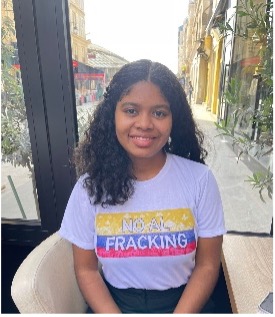
Étudiante en génie de l’environnement, elle est aussi militante socio-environnementale. Engagée pour les droits humains, elle défend notamment les droits de tous et toutes et en particulier des plus jeunes à disposer de l’eau, à évoluer dans un environnement sain, à grandir sur leur territoire d’origine et à y prendre des décisions politiques. Elle est membre du comité AGUAWIL et de l’Alliance Colombia Libre du Fracking.
« Dans un pays comme la Colombie, nous n’avons d’autre choix que de lutter pour nos droits. »
Interview Yuvelis Natalia MORALES BLANCO – 23 juin 2024
Pourriez-vous vous présenter ?
Je m’appelle Yuvelis Natalia Morales Blanco et je suis colombienne. Je vis à Puerto Uliches, dans un petit village situé sur les rives du Magdalena, le plus grand fleuve du pays. Ma région (Santander), est particulièrement impactée par le conflit armé et le manque d’opportunités professionnelles. Plutôt que défenseure des droits, j’aime dire que je suis « protectrice/gardienne de la vie » (« soy cuidadora de la vida »).
Pouvez-vous décrire votre engagement en tant que défenseure des droits de l’homme ?
Le devoir de tout défenseur des droits humains est de « protéger la vie ». Pour ma part, je milite pour l’accès de tous à une vie digne, en particulier pour les enfants et adolescents.
Pourquoi avez-vous décidé de vous engager en faveur des droits de l’homme ?
Mon histoire commence au bord du fleuve Magdalena, qui, chaque jour, est soumis aux activités d’extraction pétrolière et d’exploitation minière. Issue d’une famille de pêcheurs, nous nous sommes battus pour le respect de nos droits et de notre environnement. Nous sommes le maillon faible d’une société de consommation avide de sécurité énergétique, ce qui nous plonge dans une profonde insécurité sociale. Depuis plus d’un siècle, une lutte constante oppose la conservation de la biodiversité de notre fleuve à la quête de développement.
Mon engagement a véritablement débuté avec l’arrivée du fracking dans mon village. Cette technique d’extraction d’hydrocarbures et de gaz utilise d’énormes quantités d’eau et une multitude de produits chimiques. Socialement, c’est une catastrophe, et sur le plan environnemental, c’est encore pire. La lutte contre le fracking est devenue une lutte pour la vie et pour ma propre survie. Il devient de plus en plus difficile de défendre les droits humains sans risquer sa vie. La Colombie est le pays où le nombre de défenseurs assassinés et déplacés est le plus élevé.
Comment l’initiative a-t-elle aidé votre projet ?
L’Initiative Marianne est un véritable tremplin, surtout pour les défenseurs des droits reconnus seulement au niveau local. Rencontrer des fondations et des associations internationales, c’est comme disposer d’un microphone pour se faire entendre dans le monde entier. C’est également l’opportunité de pouvoir s’exprimer sans que notre sécurité physique ne soit menacée.
Pour moi, les aspects les plus précieux du programme étaient les visites sur le terrain et la découverte des initiatives locales, ainsi que l’opportunité de sortir de la routine pour apprécier des fêtes, rencontrer des amis et déguster de bons repas. La construction de réseaux est essentielle, et chaque activité – formations, rencontres, célébrations, échanges, bénévolat – m’a permis de créer de nombreux contacts que je maintiens encore aujourd’hui. La capacité de l’Initiative Marianne à créer des réseaux offrant refuge et soutien est particulièrement remarquable.
Quels sont vos projets maintenant que le programme est terminé ?
Je suis retournée en Colombie, et maintenant, mon grand projet est d’intégrer la coordination de l’Alliance Colombienne contre le Fracking. Avec l’association Construyendo Sueños de Mujer, nous réalisons des projets en faveur de la promotion des droits humains, notamment ceux des femmes et des enfants en Colombie.
J’ai également travaillé au Tribunal International des Droits de la Nature en Amérique Latine. En parallèle, je coordonne des initiatives latino-américaines contre la prolifération des combustibles fossiles et collabore avec des écoles de durabilité pour jeunes activistes. Je suis désormais enseignante et animatrice d’ateliers pour la résolution des conflits socio-environnementaux liés à l’eau.
Je fais partie du réseau international des défenseurs des droits humains et environnementaux et je suis également conférencière internationale. Mon engagement se concentre sur la promotion des droits de la nature ainsi que sur les droits des enfants et des jeunes femmes. Je continue à travailler sur ces questions tout en poursuivant mes études universitaires.
Je collabore avec des journalistes nationaux et internationaux pour documenter et agir sur les conséquences négatives de l’extraction d’hydrocarbures, particulièrement dans ma région. Nous préparons des rapports pour mieux comprendre ces impacts.
Je fais aussi partie du réseau pour la décarbonisation de l’économie, et je suis le financement des projets hydrocarbonés. En outre, je suis impliquée dans le mouvement « Jeunes pour le soin de l’environnement » et participe à La Chiva Climática, une initiative innovante utilisant un bus pour organiser des ateliers itinérants sur l’action climatique dans les régions touchées par l’extraction minière et pétrolière.
Enfin, je suis également membre du tribunal gérant le cas de Vaca Muerta en Argentine, où nous essayons de rendre un verdict sur les effets du fracking.
Souhaitez-vous ajouter quelque chose ?
En France, j’ai commencé à comprendre comment me défendre et défendre mes droits. En tant que défenseur.e.s, nous essayons souvent de combler les lacunes laissées par la société, mais parfois nous nous perdons dans cette mission. Nous, les femmes défenseures des droits humains, subissons une violence systématique quotidienne. Être une femme défenseure des droits humains et de l’environnement dans un contexte si violent pousse à remettre en question notre condition féminine. En France, je me suis entourée de collectifs féministes et de défenseurs de la nature.
J’ai toujours su que je souhaitais retourner en Colombie. La France est un magnifique pays mais ce n’est pas le mien. En Colombie, nous avons notre propre définition de la biodiversité. Lors de mon séjour en France, en tant que défenseuse de la nature, il m’était essentiel d’expliquer que la Colombie subit une situation de profonde inégalité sociale, de violence systématique et de consommation énergétique des pays du Nord.
Vous avez une question ? Contactez-nous !
Contact