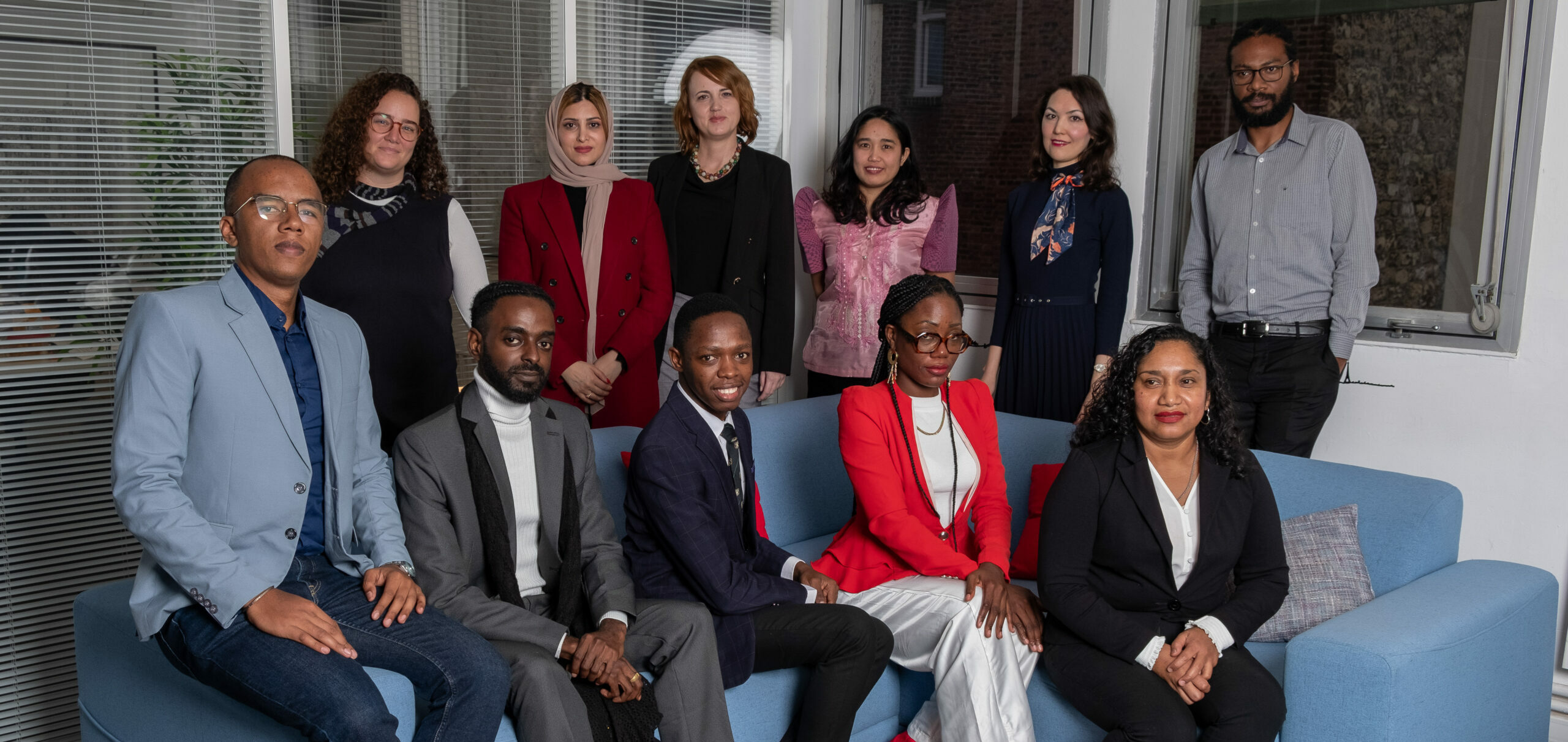
The laureates

KIRIMWINGABO Chrysostome
Civil and political rights, fight against repression and governmental violences
Description
Chrysostome KIRIMWINGABO is a member of the Burundian Human Rights League (Iteka), the leading human rights organization in Burundi. Despite the government’s dissolution of his organization in 2015, Chrysostome continues his human rights advocacy work alongside League members in exile in Uganda, through the production of weekly bulletins and monthly, quarterly, and annual reports on human rights violations committed in Burundi. Its deregistration has limited the Iteka League’s work to monitoring, reporting, and advocacy, but its efforts have contributed to the opening of investigations by international bodies and the imposition of sanctions. Its decentralized structure allows Chryosotome and his colleagues—who have been in exile since the 2015 political crisis—to continue their work.
Chrysostome KIRIMWINGABO interview - 07/26/24
Can you please introduce yourself?
My name is Chrysostome Kirimwingabo, and I am a member of the Burundian Human Rights League, the leading civil society organization in Burundi. Due to the Burundian government’s crackdown on those who speak out against the regime’s human rights violations, I went into exile in Uganda before seeking asylum in France.
In Burundi, I grew up in the “school clubs” created by the Human Rights League, which instilled in me the values of respect for human dignity. My activism began when I started college in 2009, when I became a full member of the Burundian Human Rights League. At that time, I spent several hours a week visiting detention centers to verify compliance with standards and assess the living conditions of detainees.
Can you describe your work as a human rights advocate?
Within my organization, I am working to restore the rule of law in Burundi. Although there is much to be done, our main activity is to monitor human rights violations committed in the country in order to advocate with regional institutions, such as the East African Community and the African Union, as well as at the international level. In addition, we use social media to raise public awareness, inform citizens about their rights, and encourage them to protect themselves against political manipulation.
Why did you decide to advocate for human rights?
I can’t say exactly why, other than my desire to help make the world a better place. I can’t stand injustice, and it seemed obvious to me that I should get involved, even if it puts my life at risk. In fact, because of the danger my job posed, I had to go into exile.
It was through the Human Rights League that I found a way to take action. During our visits to detention centers, we witnessed the release of detainees who had been arbitrarily imprisoned by police officers. This motivated me even more to deepen my commitment to this cause.
Comment l’initiative Marianne vous a-t-elle aidé à concrétiser vos projets ?
The Marianne Initiative has been a great help to me in bringing my projects to fruition by enabling me to work on establishing regional initiatives to monitor and track violence and human rights violations. Thanks to the contacts I’ve made through the Marianne Initiative, I can now develop my project in greater depth.
In particular, the training sessions on leadership, post-conflict reconstruction processes, and transitional justice were extremely enriching. The meetings with NGOs and international organizations were truly valuable opportunities.
What are your plans now that the program is over?
I am currently in France and am working to raise the profile of my project through the contacts I made during the program. I have fully resumed my organization’s activities, which had been scaled back while I was participating in the training. I am now focusing on managing my organization while seeking funding for my project.