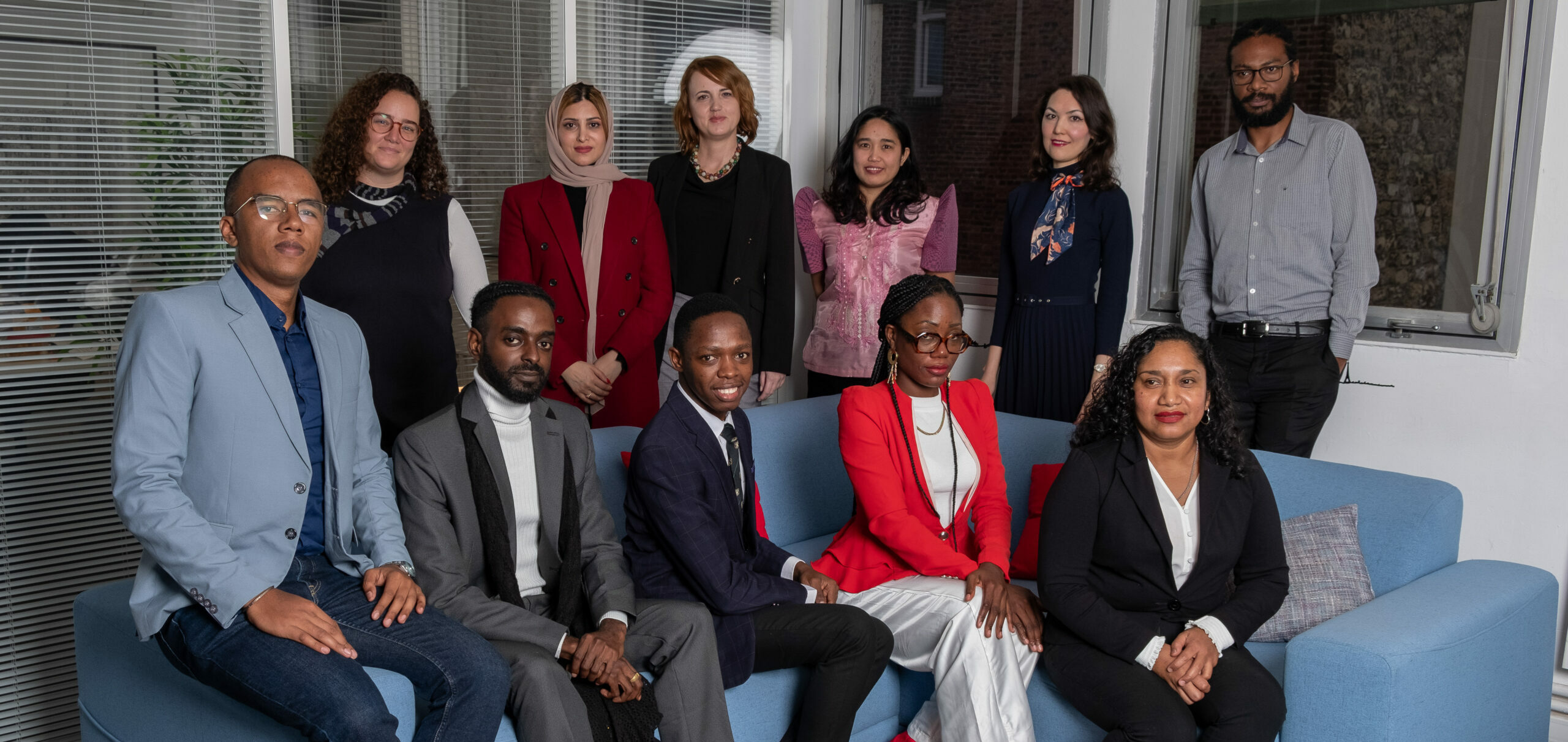
The laureates

Description
Shaheen H. ElSharif is a Sudanese teacher and educator who works to empower young people. As a human rights advocate, he is particularly committed to promoting access to democracy. He is dedicated to community development in conflict zones, notably through civic organizations (the National Association for Religious Freedom, Future Makers Sudan, and the Khartoum Resistance Committees).During the 2018 revolution in Sudan, Shaheen served as a coordinator for the pro-democracy youth movement. He was subsequently elected as the municipal coordinator for the Central Khartoum district before being imprisoned following the 2021 military coup. As co-founder and director of the NGO Youth In Action – Sudan, he leads international advocacy efforts for youth-led democratic movements and helps identify essential skills within communities and encourages youth participation in decisonal process.
Shaheen EL SHARIF HISHAM interview - 07/23/24
Can you please introduce yourself?
My name is Shaheen Hisham Al-Sharif. I am 28 years old and I am a professor of communication and computer science in Sudan. I was a member of the Sudanese Resistance Committee during the December 2019 Revolution, where I played a key role among the young leaders. I also served as coordinator for the Central District of Khartoum and its municipality. Deeply committed to community work, I am passionate about Sudan, its culture, and its people, which has led me to travel throughout the country.
Can you describe your work as a human rights advocate?
I co-founded the organization Youth in Action Sudan, which aims to support the youth movement that began during the Revolution and ensure that their voices are heard and taken into account by the government. We have worked to strengthen the capacity and structure of this movement so that it can influence government policies and gain international prominence.I then continued my work throughout Sudan, from the east—in Port Sudan—all the way to the Noba Mountains, which are isolated due to numerous rebel groups, passing through Darfur and northern Sudan along the way. During this journey, I witnessed the atrocities committed by the government: massacres, threats, repression, and so on.
I then became involved in politics, particularly with the pro-democracy movement and in support of Abdallah Hamdok’s government. In particular, I worked on campaigns for the FFC (Forces of Freedom and Change). After the coup d’état on October 25, 2021, I helped organize the protests on October 30.
Since then, I have led Youth in Action Sudan until I joined the Marianne Initiative’s Class of 2024.
Why did you decide to advocate for human rights?
I’m originally from Khartoum, the capital of Sudan. It’s probably the most privileged place in the country, even though life there isn’t easy. Raised by a single mother, I quickly became aware of the injustices our system inflicted on families—and especially on women—who didn’t conform to Islamic norms.The widows in my family were arrested many times. When the Revolution broke out, I realized that the injustices we were experiencing were widespread and that, by uniting, the people had the power to transform society. Since then, I have been committed to fighting these injustices wherever necessary.
One of the goals of Youth in Action Sudan was precisely to create a space for those who want to get involved in the struggle but lack support. This organization is therefore not only a network of resources, but also a place where everyone can find hope by joining others who share the belief that change is possible.
How did the Marianne Initiative help you bring your project to life?
Selon moi, ce que l’Initiative Marianne offre de plus important, c’est la reconnaissance.
C’est essentiel pour quelconque mouvement de savoir qu’il est entendu, soutenu et légitime. L’Initiative m’a offert une plateforme pour partager ces histoires, non seulement mon histoire personnelle mais celles de centaines de milliers de jeunes soudanais qui aspirent au changement depuis 2019.
The program also enabled Youth in Action Sudan to take its work to the next level and become a structurally effective organization. Meetings with various NGOs, institutions, and academics gave us the opportunity to build our capacity and gain new skills and knowledge.
Finally, being in France allowed me to be safe, since it was no longer possible for me to work in Sudan. How can you help others if you can’t even provide for yourself anymore?
What are your plans now that the program is over?
I am currently in the process of applying for asylum in France, the country of human rights, which allows me to continue my work in complete safety on behalf of Sudan, while putting to good use the knowledge I gained through the Marianne Initiative.
To move to the next stage, our organization has taken on a more political role. We are more involved in peace efforts, participating as much as possible in various initiatives, particularly in Europe in small-scale negotiations and humanitarian aid negotiations. We hope that this work will ultimately lead to a peace agreement.
Would you like to add anything else?
I would like to add that the Marianne Initiative represents a great opportunity to raise awareness of the causes championed by human rights advocates. This is not a program for personal recognition, and everyone’s participation can help thousands of people. I hope that each of the future participants will take full advantage of this opportunity, and I wish them the best of luck on their journey.
#KeepEyesOnSudan